

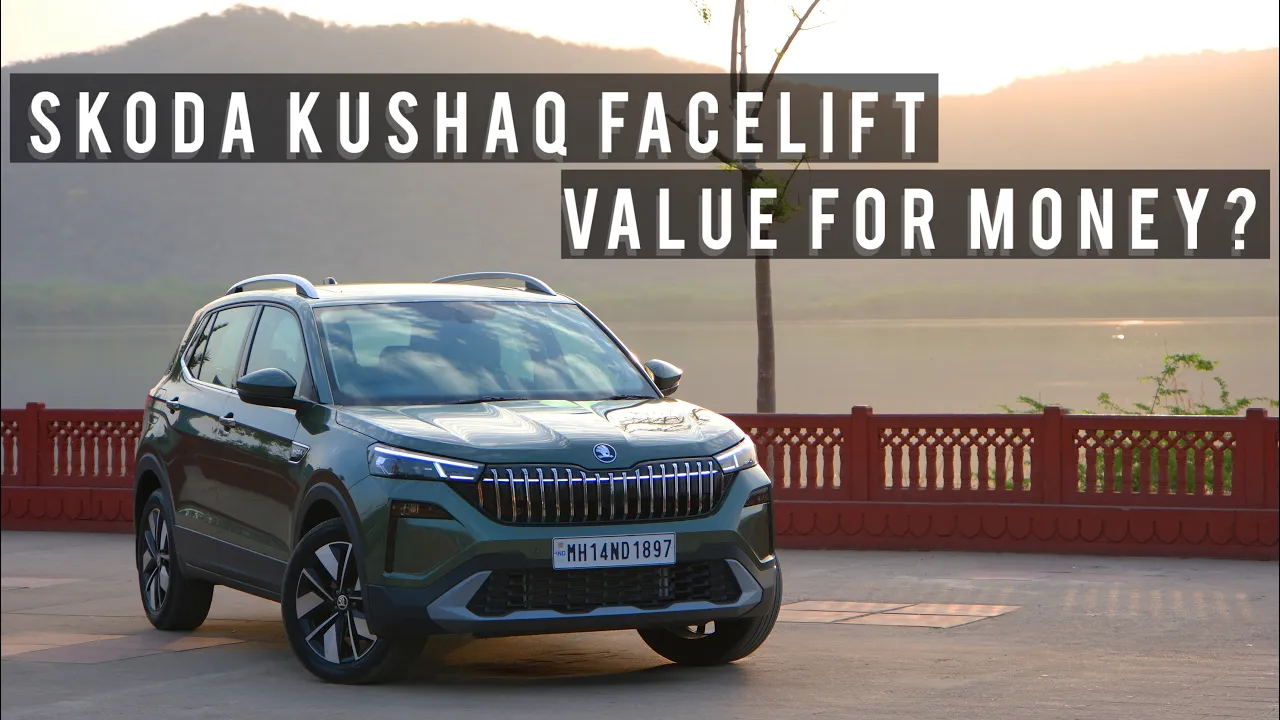
The biggest talking point around the 2026 Skoda Kushaq facelift isn’t the connected tail lamps, panoramic sunroof, massage seats, or even the refreshed styling. It is what sits between the engine and wheels.
For the first time, the 1.0-litre TSI engine gets paired with an all-new 8-speed torque converter automatic gearbox, replacing the older setup and introducing something that no other midsize SUV currently offers.
While the 1.5-litre variant remains largely unchanged mechanically apart from rear disc brakes, the smaller engine automatic combination is where Skoda has attempted to address one of the biggest long-term ownership concerns buyers usually have which is gearbox reliability.
After spending time driving the new Kushaq facelift on highways around Jaipur, here is what this update actually feels like from behind the wheel.
Exterior Changes
The facelift does enough visually to make the Kushaq feel fresh without changing the identity of the SUV altogether.
At the front, there is a redesigned grille with illuminated lighting elements, additional chrome detailing, revised bumpers and new LED headlamps. The bumper design itself looks sharper while the addition of front parking sensors improves everyday usability.
Along the side, the newly designed 17-inch alloy wheels immediately stand out while the dual-pane panoramic sunroof finally addresses one feature buyers repeatedly asked for.
At the rear, the connected LED tail lamp setup adds modernity while redesigned bumpers, sequential indicators and revised detailing ensure it no longer looks identical to the earlier car.
The Monte Carlo version adds extra visual drama with red accents, blacked-out elements, unique wheels and sportier interiors. It certainly looks more aggressive, although mechanically nothing major changes.
Interior and features
Inside, the updates are subtle but meaningful. You now get a larger digital cockpit, updated dashboard materials, dual-colour ambient lighting, powered front seats with ventilation, wireless charging and improved infotainment functionality with AI integration.
The dashboard design itself doesn’t feel dramatically different, but the overall experience feels richer. However, what genuinely grabs attention is the rear seat massage function. Yes, massage seats in the rear.
It only works on your back and not the seat base, but it remains one of those features that immediately becomes a conversation starter.
Space inside continues to be good. Visibility remains strong and the seating position still feels typically European, slightly lower and more car-like compared to some rivals.
The New 8-Speed Automatic
This is where things get interesting. The 1.0-litre three-cylinder turbo petrol produces 85 kW and 178 Nm. Those numbers themselves are not revolutionary. What transforms the experience is the new 8-speed torque converter. And the first thing you notice is smoothness.
From standstill, the gearbox does not feel jerky or confused. Gear changes happen quickly and more importantly, they happen cleanly. Even during repeated hard acceleration runs, head toss remains minimal.
The Kushaq isn’t explosively quick off the line. There is a slight hesitation initially as the gearbox and engine sync together. But once moving, it gathers speed surprisingly quickly. Floor the throttle and triple-digit speeds arrive sooner than you might expect.
What you do hear though is the engine. Under hard acceleration, the three-cylinder motor becomes noticeably vocal. Push it aggressively and the cabin does remind you that this is still a small displacement turbocharged engine working hard.
But during normal driving? The refinement is impressive. Cruising at 80 km/h sees the engine spinning close to 1,500 rpm. Even at highway speeds, revs remain comfortably low and that relaxed nature transforms long-distance driving.
The biggest advantage of eight ratios becomes obvious here, the gearbox keeps shifting early and constantly tries to stay in higher gears.
Fuel Efficiency
During the drive, despite multiple acceleration runs and repeated performance testing, the displayed efficiency hovered around 15 km/l and kept climbing during steady cruising.
Realistically, highway efficiency figures between 17-18 km/l on longer drives seem achievable. For buyers regularly doing highway runs, this relaxed gearing setup may become one of the strongest reasons to choose this powertrain.
Because unlike some smaller turbo engines that constantly feel stressed, this setup rarely feels like it is working hard.
The gearbox offers Drive, Sport and Manual modes. Paddle shifters respond quickly enough and manual gear changes happen smoothly. The transmission itself feels fast enough that enthusiasts may not miss a dual-clutch setup as much as expected. But honestly, this gearbox works best when left alone.
Still One Of The Better SUVs To Drive
The Kushaq has always been among the better driver’s cars in this segment and thankfully, that character remains intact. The steering feels predictable and confidence inspiring.
High-speed lane changes feel natural. Body roll exists because, this is still an SUV. But, the chassis remains composed and doesn’t feel nervous.
What stands out most is predictability. You always know what the vehicle is doing. The steering itself is light enough for daily use but compared to some rivals, especially Korean competitors, it does feel slightly heavier at parking speeds. That isn’t necessarily a complaint. Some buyers may actually prefer this added weight.
Ride Quality
The suspension setup delivers exactly what existing Kushaq owners would expect. At highway speeds, it feels planted, absorbent and mature. Broken roads are where things change. Sharp potholes and rough patches at slower speeds can feel slightly stiff, particularly because of the 17-inch wheel setup.
For long-distance travel though, the overall package works very well. Passengers in the rear will likely appreciate the comfort levels, especially if they’re enjoying those massage seats.
Braking Performance
The 1.0-litre variants continue using rear drum brakes while rear disc brakes remain exclusive to the 1.5-litre versions.
In real-world driving though, braking performance does not feel compromised. Pedal feel is easy to understand, progressive and confidence inspiring. The only annoyance comes from the aggressive start-stop system. In slow traffic, the engine tends to shut down quite eagerly, sometimes before you have completely stopped.
Final Verdict
The 2026 Skoda Kushaq facelift does not reinvent the Kushaq. It didn’t need to. Instead, it improves the areas buyers actually care about. The design looks fresher. The cabin feels richer. Features have increased significantly. But the real star here is that new 8-speed automatic.
It delivers smooth shifts, relaxed cruising manners, impressive efficiency and potentially better long-term peace of mind compared to what many buyers worry about with more complicated transmissions.
The Kushaq was already one of the better driver’s SUVs in this segment. Now, it may also have become one of the more sensible automatic choices too. And that combination makes this update far more important than it initially appears.
Also read: All-new Tata Sierra Review

