

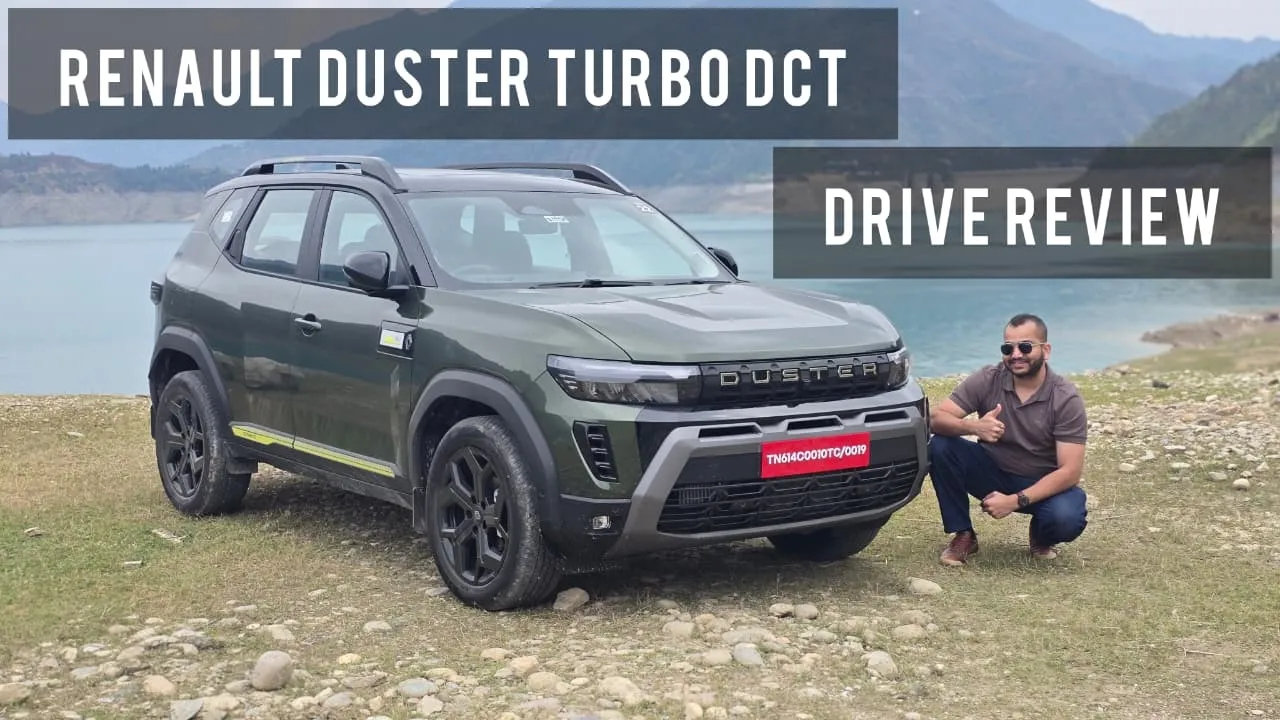
There are very few cars in India that can genuinely claim to have changed the market forever. The Renault Duster is one of them. Before the Duster arrived, SUVs were either expensive ladder-frame machines or glorified hatchbacks pretending to be something they were not.
The Duster changed that formula. It brought genuine SUV attitude, fantastic ride quality, tough looks and accessible pricing into a package that suddenly made midsize SUVs aspirational. Then the Duster disappeared.
While rivals kept evolving, the Duster slowly faded away and manufacturers like Hyundai, Kia and Maruti Suzuki built empires in the space that Renault had originally created. Now, after what feels like an eternity, the Duster is back. The question is simple, has Renault merely revived a nostalgic nameplate or have they genuinely built something capable of challenging the segment leaders again?
After spending time with the new-generation Renault Duster in its Turbo TCe 160 DCT avatar, the answer is surprisingly clear. The moment you see the new Duster in person, one thing becomes obvious. Renault hasn’t tried too hard to reinvent it. Thankfully.
Design
The silhouette instantly feels familiar. The upright proportions, muscular wheel arches, flat bonnet and chunky stance immediately remind you why people loved the original. In an era where many SUVs are becoming increasingly crossover-like, the Duster proudly continues looking like an actual SUV.
The front end works particularly well. The bonnet is tall and flat with pronounced power bulges that make the car look muscular without appearing cartoonish. The slim LED lighting setup gives it a modern touch without resorting to unnecessary connected light bars or excessive chrome. Renault deserves credit here because restraint often produces better design.
From the side profile, the proportions continue working in the Duster’s favour. Large wheel arches, generous cladding, dark-themed 18-inch wheels and a properly squared-off stance create genuine road presence. Even at the rear, the connected lighting setup has been integrated neatly without looking forced.
More importantly, this car genuinely looks capable. Even if Renault currently offers only front-wheel-drive variants, visually, the Duster still carries that rugged personality that many competitors have gradually abandoned.
Interior
Step inside and you immediately realise this is not the old Duster anymore. That’s a good thing because the previous car had several ergonomic compromises that felt outdated even towards the end of its life cycle. The new car fixes most of those problems.
The driving position immediately stands out. Even with the seat set low, visibility is excellent. You can clearly see the sculpted bonnet edges from behind the wheel and this dramatically improves confidence when placing the car on the road. Everything feels properly SUV-like from behind the wheel.
The front seats deserve appreciation too. The launch edition receives attractive upholstery with contrast accents, power adjustment and seat ventilation. They look premium and more importantly, they remain comfortable over long durations. Both front occupants also receive lumbar adjustment which is increasingly becoming rare. However, the cabin is not perfect.
The biggest disappointment inside the Duster is material quality. Renault has improved design, layout and features but plastics still feel average for something that can approach Rs 20 lakh on-road. Touch points across the dashboard and doors simply do not feel as expensive as some rivals. The cabin looks modern but when you begin touching surfaces, the illusion starts fading slightly.
Practicality
Boot capacity stands at 518 litres up to the parcel shelf and stretches considerably further when loaded to the roof. More importantly, the space is genuinely usable. Large suitcases fit comfortably, the rear seats fold 60:40 and Renault has included useful hooks and storage areas that make the space practical for road trips.
Rear seat space is decent rather than class-leading. Knee room could have been better, especially behind taller drivers, but comfort remains acceptable thanks to reasonable headroom, decent cushioning and a comfortable armrest setup. The middle passenger still has to deal with a transmission hump and elevated seating position, so three adults across long journeys may require compromises.
What prevents the rear cabin from feeling cramped is the generous glass area combined with the large panoramic roof. Despite the darker interior theme, there is enough natural light entering the cabin to avoid any feeling of claustrophobia.
Features
You get powered seats, ventilated seats, panoramic sunroof, dual-zone climate control, wireless charging with cooling, multiple USB Type-C ports, connected technology, ADAS, digital instruments and a feature-rich touchscreen that supports wireless smartphone connectivity. Not everything impresses though.
The 360-degree camera quality is simply below expectations. Resolution is poor and feels out of place in a car competing against increasingly sophisticated rivals. The touchscreen itself works reasonably well but software polish could definitely improve. Then there are the quirks.
Renault still continues with that separate steering-column-mounted audio controller. It felt odd a decade ago and continues feeling odd today. Some habits deserve nostalgia. This one doesn’t. Fortunately, the moment you start driving, many complaints begin disappearing.
Performance
The biggest reason people loved the original Duster was never features or interiors. It was the way it drove. Thankfully, Renault clearly remembered this.
Powering the Turbo TCe 160 variant is a 1.3-litre four-cylinder turbo petrol producing 163PS and 280Nm paired with a six-speed dual-clutch transmission. Numbers look competitive on paper but what matters more is how accessible performance feels.
The engine responds quickly. Overtaking feels effortless. Mid-range punch is strong. The DCT behaves intelligently and gearshifts happen quickly without introducing excessive jerks or hesitation. Paddle shifters are available for drivers who want additional control but honestly, the gearbox rarely gives you a reason to intervene.
There is one complaint. You hear the engine. Not because it sounds bad, but because insulation could have been better. Under acceleration, during downshifts or while climbing gradients, engine noise remains noticeable. It never becomes unpleasant, but you are constantly aware that the engine is working.
Handling
Where the Duster absolutely shines is steering feel. This is easily among the best steering setups currently available in the segment. Modern SUVs have increasingly become isolated and numb. The Duster feels different. The steering communicates. It tells you what the front wheels are doing. It encourages confidence rather than simply transporting you from one place to another.
Drive this car through corners and suddenly everything makes sense. Body control feels mature. Turn-in response feels sharp. Weight transfer remains predictable. You find yourself carrying speed through corners simply because the car constantly reassures you.
Ride quality
The old Duster built its reputation here and thankfully the new one continues that tradition. The suspension setup is brilliantly judged. Broken roads disappear beneath the car with remarkable composure. Even rough hill sections, damaged surfaces and poor roads fail to unsettle the chassis significantly. Yes, the large 18-inch wheels introduce some sharpness over bad edges and smaller wheels may actually improve comfort further, but overall ride quality remains among the strongest reasons to buy this vehicle.
What makes the setup particularly impressive is balance. Many comfortable cars become soft and floaty. Many good handling cars become stiff. The Duster somehow manages to deliver both.
Braking performance complements the package well. Pedal feel remains progressive, confidence is high and grip levels from the stock setup never gave reasons for concern even during enthusiastic driving.
Fuel efficiency
Turbo petrol engines often scare buyers, but the numbers here are surprisingly encouraging. Even during hilly driving conditions involving constant elevation changes, gear shifts and enthusiastic driving, indicated efficiency remained around 13 kmpl. Highway cruising should comfortably deliver significantly better numbers.
Verdict
So where does that leave the new Renault Duster? It is not perfect. Interior plastics could improve. Camera quality disappoints. Some Renault quirks refuse to disappear. Rear space is good rather than exceptional. But then you start driving it. And suddenly you remember why the Duster became special in the first place.
This new-generation car feels like Renault finally remembered its own identity. Instead of trying to copy competitors, they have focused on building something that feels distinct again.
The new Duster is comfortable. It is practical. It looks like an SUV. Most importantly, it is genuinely enjoyable to drive. Renault may have arrived late to the party, but this time, they have at least remembered why they were invited in the first place.
Also read: 2026 Kia Seltos Review

