

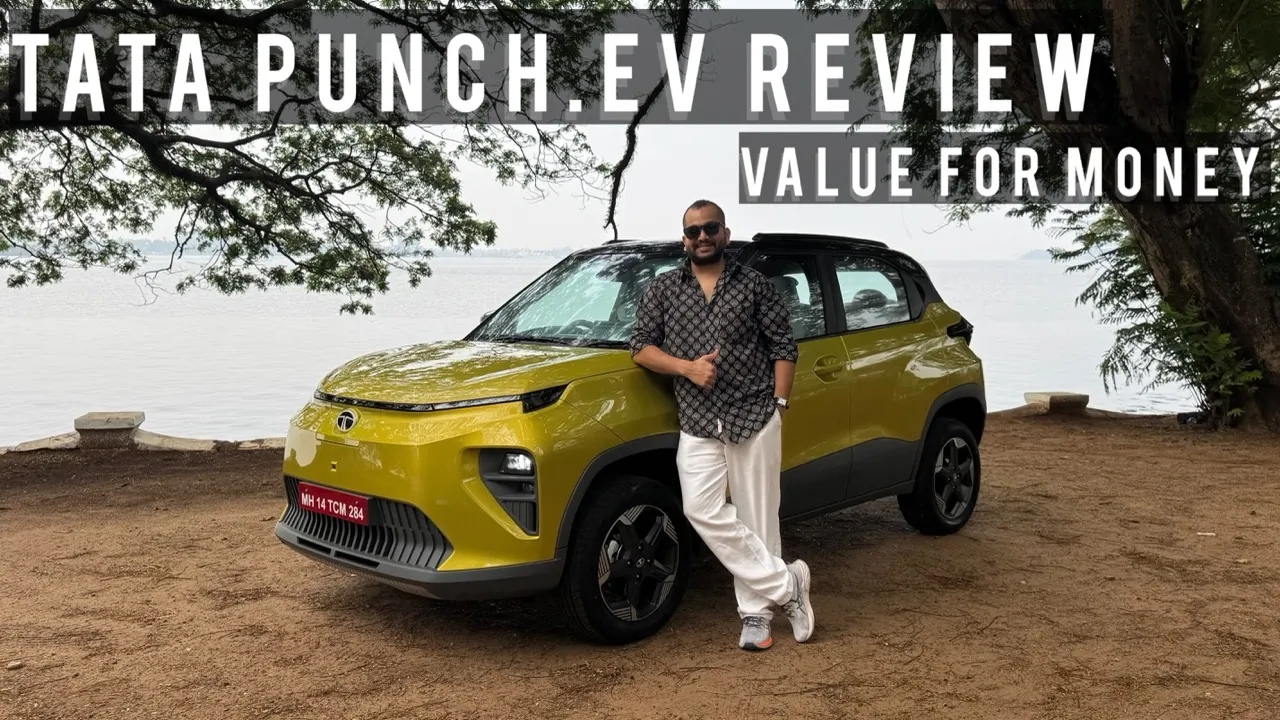
With prices starting from Rs 9.69 lakh, this could genuinely shake things up. The 2026 Tata Punch.ev facelift isn’t trying to reinvent itself. Instead, it focuses on improving what already worked, adding bigger batteries, more range, fresh styling, improved suspension tuning, and some meaningful updates that make the Punch.ev feel more complete than before.
But does all of that actually translate into a better ownership experience? After spending time behind the wheel, the answer appears to be yes.
Design
At first glance, the front fascia still looks recognizably Punch.ev. However, Tata has introduced enough changes to ensure it doesn’t look like a mild refresh.
The bonnet design remains unchanged, but the connected DRL strip is gone. Instead, LED DRLs sit separately on either side and also function as turn indicators. The charging flap has been redesigned, while the bumper gets a fresh look altogether.
The biggest visual talking point, however, is the new grayscale cladding. Unlike the older black plastic finish, the new Punch.ev gets gray cladding across:
- Front bumper
- Wheel arches
- Side body cladding
- Rear bumper sections
This creates a unique three-tone appearance, especially when paired with the new dual-tone exterior colors.
Despite being a small vehicle, the Punch.ev still carries respectable road presence. It doesn’t feel tiny or apologetic.
At the rear, Tata has introduced connected LED tail lamps with chunkier housings, revised bumper styling, fresh badging, and additional sporty elements around the spoiler area.
Interior updates
Step inside and you immediately notice where Tata spent most of its effort. The biggest change is color. The cabin now gets lighter shades with grayscale finishes spread across the dashboard, door trims, and seats. The result is a cabin that feels noticeably more airy and spacious.
Yes, hard plastics remain. This is still positioned as an affordable EV. But visually, the cabin feels premium enough. The seats also receive new upholstery patterns mixing leatherette and fabric materials. The front seats continue offering ventilation, which remains a big advantage in Indian weather conditions.
Features
Highlights include:
- 10.25-inch touchscreen infotainment
- Digital instrument cluster
- Ventilated front seats
- Electric parking brake with auto hold
- Wireless smartphone connectivity
- Connected car features
- Sunroof
- Drive mode selection
- Regenerative braking controls through paddles
Rear seat practicality remains impressive for the vehicle size.
Wide-opening doors make ingress and egress easy, foot room remains decent, and the relatively flat floor means even three passengers can manage shorter trips.
Boot space remains unchanged at 366 litres while the usable frunk continues to add practicality.
Specifications
The biggest update sits underneath. The Punch.ev now comes with two battery options:
|
Specification |
Punch.ev 30 |
Punch.ev 40 |
|
Battery Size |
30 kWh |
40 kWh |
|
Power |
65 kW |
95 kW |
|
Torque |
154 Nm |
154 Nm |
|
Claimed 0-100 km/h |
13.5 sec |
9 sec |
|
Claimed Range |
Higher than before |
Over 460 km |
|
Cooling |
Liquid Cooled |
Liquid Cooled |
Tata says both battery packs use newer technology, allowing larger capacities within similar packaging dimensions.
More importantly, the company is now offering lifetime battery warranty for the first owner.
For many buyers sitting on the fence about EV ownership, this may become one of the strongest selling points.
Behind The Wheel
The Punch.ev continues to be one of the easiest EVs to understand. Visibility is excellent. You sit high enough to see all four corners clearly. Controls are simple and the learning curve is minimal.
You get multiple driving modes:
- Eco Mode
- City Mode
- Sport Mode
Eco mode is where most owners will likely spend their time. Throttle responses remain smooth and progressive. The car never feels intimidating or jerky. Even heavy throttle applications produce predictable acceleration. City mode remains the middle ground. Sport mode, however, transforms things. And surprisingly, the Punch.ev feels properly quick. Floor the throttle and the larger battery version accelerates aggressively enough to surprise vehicles costing significantly more.
Tata offers four regeneration levels:
- Level 0
- Level 1
- Level 2
- Level 3
Controls are managed using steering-mounted paddles. Maximum regen significantly slows the vehicle when you lift off the accelerator, which becomes useful in traffic or downhill driving. However, there is still no single pedal driving functionality.
Even at maximum regeneration, the car will eventually continue creeping rather than coming to a complete stop. Still, for first-time EV buyers, the setup remains intuitive and easy to adapt to.
Steering And Ride Quality
The steering feels light enough for city use. Parking remains effortless and U-turns are simple. Family members of varying ages should feel comfortable driving this vehicle. At city speeds, responses remain predictable without feeling disconnected. The suspension tuning deserves appreciation too.
Tata has retuned it to account for:
- Bigger batteries
- Changed vehicle weight
- Increased ground clearance
The result is impressive. Broken roads are absorbed well. Highway stability remains confidence inspiring and vertical movement is controlled.
Body roll exists cause this is still a tall micro SUV but, emergency lane changes never feel nervous or unpredictable.
Braking And Auto Hold
Because regenerative braking handles a large chunk of deceleration duties, traditional braking doesn’t need as much intervention. The electric parking brake and auto hold functionality make traffic driving easier.
Auto hold implementation is straightforward:
- Stop completely
- Apply firm brake pressure
- Auto hold activates
- Lift off brake pedal
- Vehicle stays stationary
Smaller Observations
A few things still need improvement.
- Rotary gear selector remains slower than ideal when switching between drive and reverse
- No rear AC vents
- No ADAS functionality
- No single pedal drive mode
However, none of these feel like deal breakers considering the pricing.
Verdict
The 2026 Tata Punch.ev facelift hasn’t reinvented itself. Instead, Tata focused on improving range, ownership confidence, ride quality, battery technology, and visual freshness. The result is an EV that feels more sensible than before.
More importantly, it feels easier to recommend. Bigger batteries, more range, lifetime battery warranty, better comfort, and pricing that still remains aggressively positioned.
For many buyers looking at their first EV under Rs 15 lakh, this might just become one of the easiest decisions to make.
Also read: Kia Carens Clavis EV Review

