

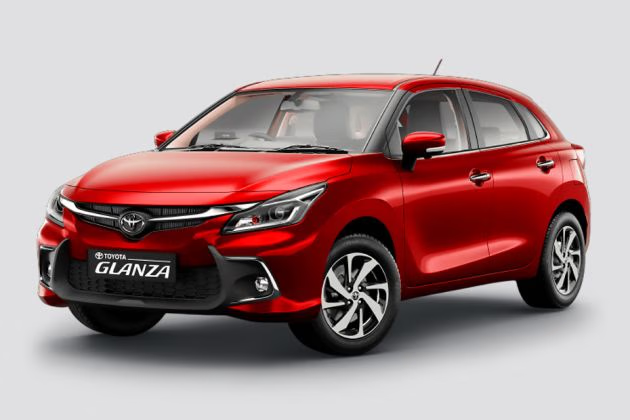
Key highlights
- Toyota Glanza facelift is expected to debut in India on October 14, 2026.
- It is likely to get the new 1.2-litre three-cylinder petrol engine from the facelifted Baleno.
- Level 2 ADAS, ventilated front seats and a wireless phone charger could be among the new features.
Toyota is set to introduce the Glanza facelift in India on October 14, bringing a series of mechanical, styling and feature updates to its premium hatchback. The update is expected to follow the same broad changes introduced with the latest Maruti Suzuki Baleno, on which the Glanza is based.
New three-cylinder petrol engine
The biggest change could be under the bonnet. Toyota is expected to replace the current 1.2-litre K12N four-cylinder petrol engine with the newer 1.2-litre Z12E three-cylinder naturally aspirated unit.
In the Baleno, this engine produces 83 hp and 112 Nm and is paired with either a five-speed manual or AMT. The same combination is expected to be offered on the Glanza facelift. A CNG version is also expected to continue, using a manual gearbox and producing around 70 hp.
Subtle design changes
The Glanza is expected to retain its familiar overall shape, with the facelift focusing mainly on the front end. A redesigned grille and revised front bumper are likely to distinguish the updated model.
The headlamps, alloy wheels and rear bumper are expected to remain largely unchanged. This means the facelift will be an evolution rather than a major visual redesign.
More safety and convenience features
The cabin layout is also expected to remain largely unchanged, but Toyota could add several new features. These may include Level 2 ADAS, ventilated front seats, a ventilated wireless phone charger and a tyre pressure monitoring system.
Interestingly, features such as a sunroof and digital driver display are not expected to be offered.
The current Glanza is priced between Rs 6.73 lakh and Rs 9.99 lakh, ex-showroom, and the facelift is expected to command a modest premium. It will continue to compete with the Maruti Suzuki Baleno, Hyundai i20 and Tata Altroz.
Also read: New Hyundai compact EV India launch confirmed by March 2027

