

Key highlights
- A J.D. Power study found that 35% of owners with a passenger display have never used it, while only 6% use it on every drive.
- Passenger screens recorded 21.3 problems per 100 vehicles, making them one of the more troublesome technologies studied.
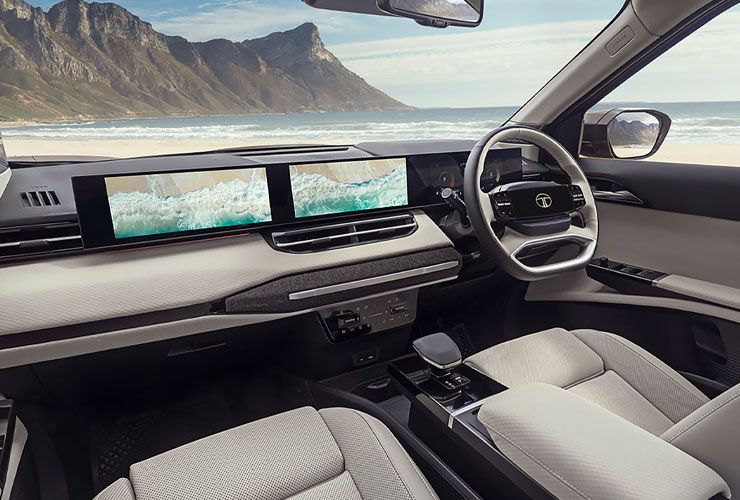
- With triple-screen dashboards becoming common in India, the bigger question is whether the third screen adds genuine value or simply adds complexity.
There was a time when a large touchscreen in a car felt futuristic. Then came digital instrument clusters. Now, several new cars have gone one step further with a third screen dedicated to the front passenger.
On paper, it sounds like a great idea. The passenger can control music, navigation, access entertainment or perform certain functions without interfering with the driver. It also makes the cabin look considerably more high-tech.
But do we really need it?
A recent J.D. Power 2026 U.S. Tech Experience Index study provides an interesting answer. Among owners whose cars were equipped with passenger displays, 35% said they had never used the screen, while only 6% said they used it on every drive. Even more interestingly, passenger screens recorded 21.3 problems per 100 vehicles, putting them among the more problematic technologies evaluated. The study surveyed 68,084 owners of 2026 model-year vehicles after 90 days of ownership.
This raises an important distinction between technology that looks impressive and technology that solves a problem.
Consider how most people actually use a car. The driver has the instrument cluster and central infotainment screen. The passenger has a smartphone. If they want music, navigation, video or even a quick internet search, they already have a device in their hand.
There are situations where the passenger screen makes sense. On long highway journeys, a front passenger could use it to manage navigation, select music or access entertainment without reaching across to the central screen. For families, it could also be useful when children or another passenger frequently occupy the front seat.
But how often does that happen?
Interestingly, the same J.D. Power study found that some of the better-rated technologies are those that quietly make the car easier to use. Smart ignition, for example, recorded just 2.4 problems per 100 vehicles.
That is perhaps the bigger lesson for carmakers. More screens do not necessarily mean a better car.
India is increasingly seeing triple-screen dashboards too, including in relatively mainstream SUVs. The visual appeal is undeniable, but owners will ultimately judge these features by how useful they remain after the novelty wears off.
Final Thoughts
What makes sense, is a brilliantly executed central screen with excellent physical controls and useful driver-assistance technology over a third screen that spends most of its life switched off.
Also read: Upcoming Hyundai Bayon-based SUV interior details leaked

