

Key highlights
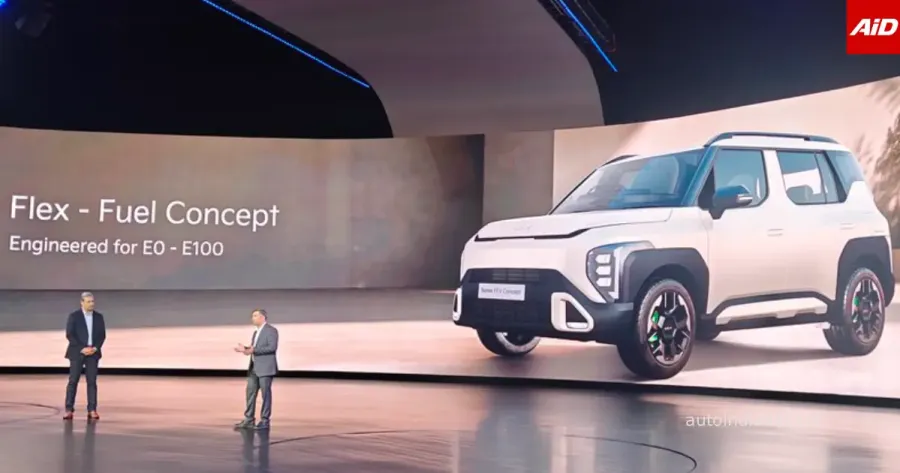
- Kia has unveiled the Syros flex-fuel concept, its first flex-fuel vehicle for India.
- It can run on petrol, pure ethanol and different petrol-ethanol blends, including E85.
- The concept uses the 1.0-litre turbo-petrol engine with a 6-speed automatic, but a production version has not been confirmed.
Kia has joined India’s growing flex-fuel movement with the Syros FFV concept. Kia’s idea is fairly simple, instead of designing a car around petrol alone, the engine and fuel system are modified to operate with different proportions of ethanol.
Syros flex-fuel concept
The Syros concept can run on pure petrol, pure ethanol and varying ethanol-petrol blends. It is also compatible with E85 fuel, which contains up to 85 percent ethanol. This could become increasingly relevant as India pushes for higher ethanol blending in petrol.
Under the bonnet is the familiar 1.0-litre, three-cylinder, direct-injection turbo-petrol engine. Kia has modified the ECU, transmission control unit and fuel system to accommodate different ethanol concentrations. Power and torque figures have not been revealed.
Powertrain changes?
Interestingly, the flex-fuel Syros gets a 6-speed torque-converter automatic gearbox instead of the 7-speed DCT offered with the standard 1.0-litre turbo-petrol version. That could be significant for durability and drivability when dealing with varying fuel compositions.
There are no major visual changes to distinguish the concept from the regular Syros. It retains the boxy tall-boy design, ice-cube LED headlamps, 17-inch alloy wheels and L-shaped rear lighting. The cabin is similarly unchanged, including the triple-screen dashboard and physical controls.
Kia is currently the second carmaker in India to showcase a flex-fuel vehicle, following Maruti Suzuki’s Wagon R flex-fuel prototype. However, Kia has not announced when, or even if, a production-spec Syros flex-fuel will reach dealerships.
The technology does have a clear purpose. Higher ethanol usage can reduce dependence on imported crude oil while creating greater demand for domestically produced ethanol. But there is another side to the equation. Ethanol contains less energy per litre than petrol, meaning fuel economy can potentially drop as the ethanol proportion increases.
Final thoughts
The Syros flex-fuel concept is less about adding another feature to the SUV and more about preparing for what we may be filling our fuel tanks with a few years from now.
The technology makes sense in India’s larger energy strategy. The bigger question is whether the infrastructure, fuel availability and economics will make flex-fuel cars equally attractive to ordinary buyers.

