

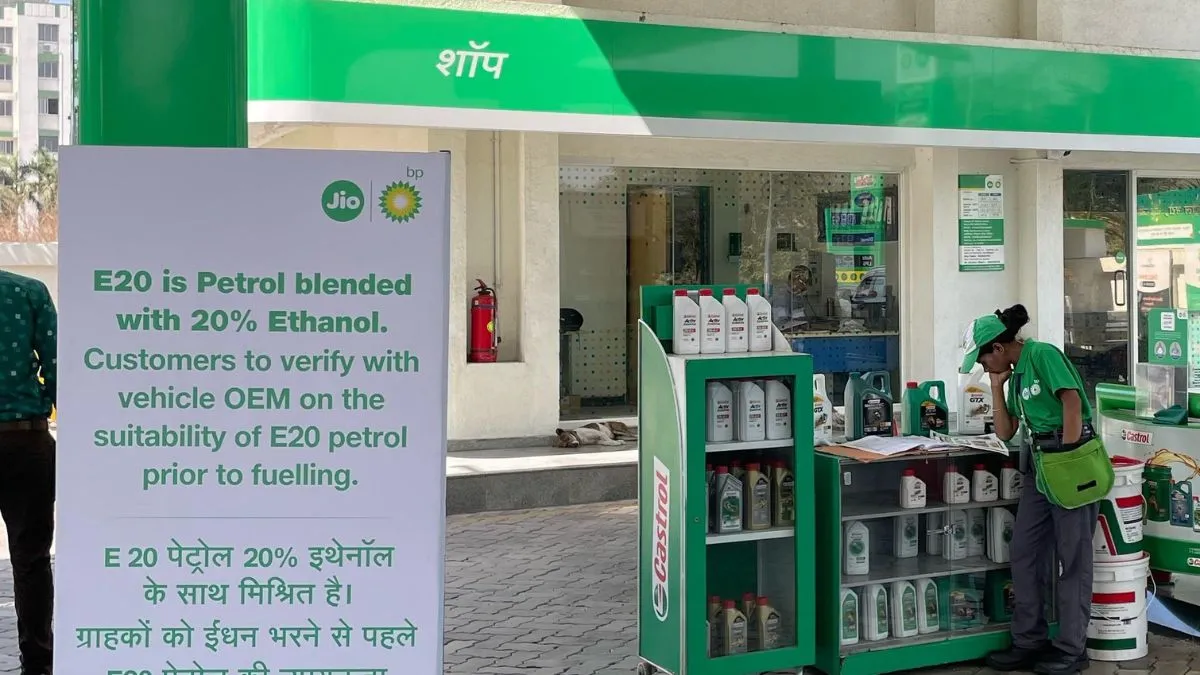
Key highlights
- A 2021 NITI Aayog report reveals SIAM had recommended retaining E10 fuel alongside E20 petrol
- SIAM warned that many existing vehicles may not be fully compatible with E20
- The industry body flagged concerns over safety, drivability and fuel efficiency
India’s transition to E20 petrol has been a major step towards reducing crude oil imports and increasing the use of biofuels. However, a previously published NITI Aayog roadmap has revealed that the Society of Indian Automobile Manufacturers (SIAM) had urged the government to continue selling E10 petrol alongside E20.
The recommendation was made in the 2021 roadmap on ethanol blending, where SIAM supported the government’s ethanol-blending programme but cautioned against completely replacing E10 with E20.
Why did SIAM want E10 to continue?
According to the report, SIAM believed that offering E10 petrol in parallel with E20 was essential to protect owners of older vehicles.
The industry body argued that a large number of vehicles on Indian roads were designed for lower ethanol blends and could face issues if E20 became the only fuel available.
Among the concerns highlighted were:
- Material compatibility issues
- Fuel leakage due to component degradation
- Reduced fuel efficiency
- Poor drivability
- Performance loss, especially in small-capacity two-wheelers
SIAM also noted that modifying older vehicles to run optimally on E20 would not be practical on a large scale.
Fuel efficiency could take a hit
Another key concern raised in the report was fuel economy. SIAM estimated that vehicles running on E20 petrol could see fuel efficiency drop by around 6 percent because ethanol contains less energy than conventional petrol.
While modern E20-compatible engines are calibrated to minimise this impact, older vehicles may experience a more noticeable reduction in mileage.
Safety concerns were also highlighted
The report also warned that prolonged use of E20 in vehicles not designed for higher ethanol blends could accelerate wear of rubber hoses, seals and other fuel system components.
Over time, this could increase the risk of fuel seepage or leakage, which in turn could become a safety concern.
The organisation therefore described the continued availability of E10 petrol as a “critical requirement” during the transition period.
Where does India stand today?
India officially rolled out E20 petrol in phases beginning in 2023, with most fuel stations across the country now supplying the higher ethanol blend.
At the same time, vehicle manufacturers have gradually updated their products to make them E20-compatible. Most new petrol vehicles sold in India today are designed to run on E20 fuel without any modifications.
However, millions of older cars and two-wheelers built before E20 compatibility became standard continue to remain on Indian roads.
Also read: Nayara cuts petrol prices by Rs 5/litre and diesel by Rs 3/litre

